
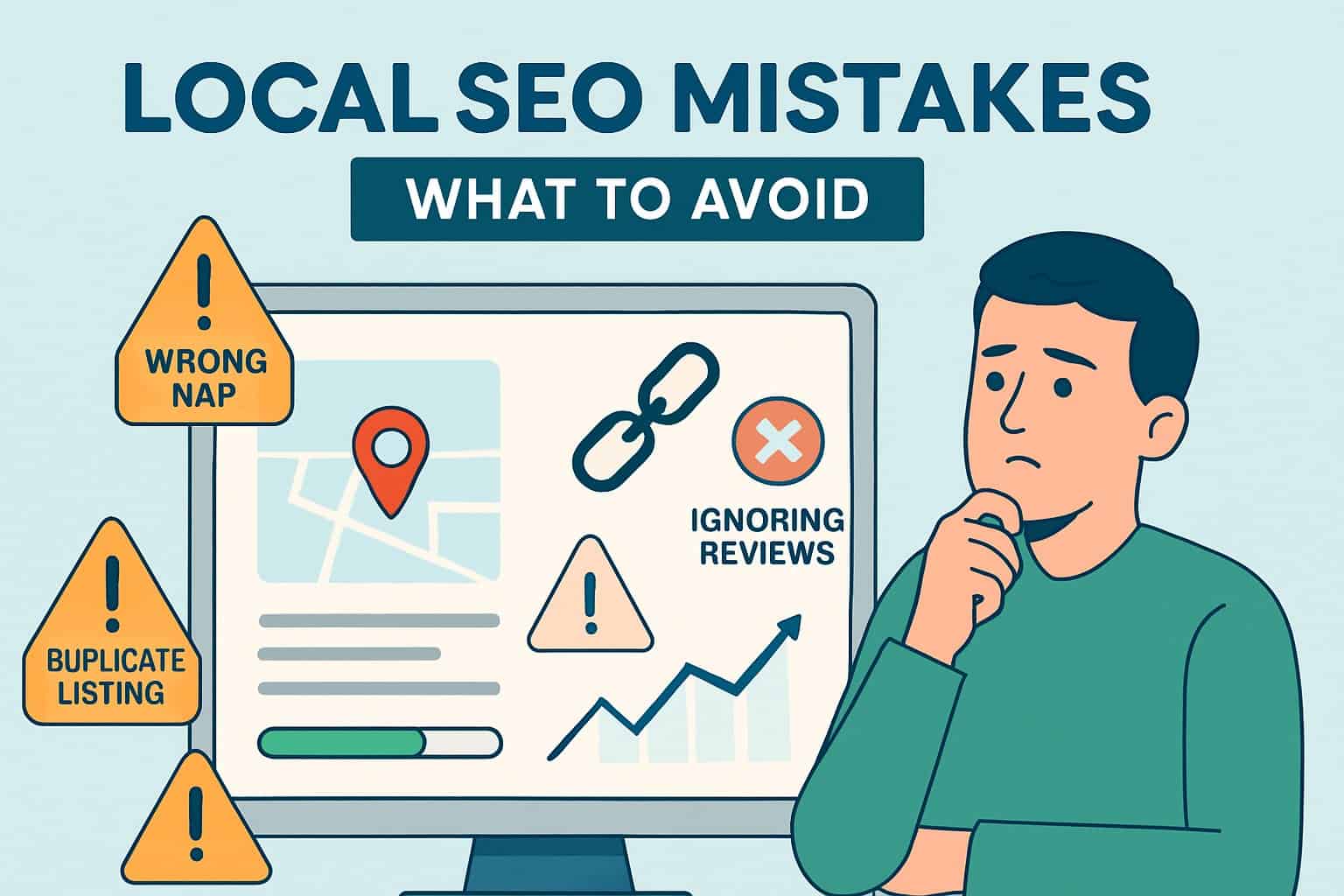
Top 10 Local SEO Mistakes and How to Avoid Them
Struggling to rank your business in local search results? You might be making some avoidable local SEO mistakes. Let’s walk through the most common pitfalls and how we can fix them.
At Maxify Marketing, we understand how vital local SEO is for driving traffic, leads, and revenue—especially in today’s digital-first world. Whether you’re a small boutique in Arizona or a multi-location service provider, local visibility can make or break your success. Yet, many businesses unknowingly sabotage their local search presence with simple errors.
So, in this guide, we’re diving into the top 10 local SEO mistakes—and more importantly—how to avoid them.
1. Inconsistent NAP (Name, Address, Phone Number)
Inconsistent NAP details confuse search engines and your customers. Let’s fix it.
If your business name, address, or phone number varies across directories, Google may not trust your information, which leads to lower local rankings. It also creates friction for customers trying to contact or locate you.
How to Avoid It:
- Audit your listings using tools like Moz Local or BrightLocal.
- Update and standardize your NAP across all directories.
- Use the exact same format (e.g., “St.” vs “Street”) every time.
Want help managing your listings? Explore our Local SEO Services tailored for consistent and scalable growth.
2. Duplicate Listings on Google Business Profile and Directories
Duplicate listings dilute your authority and cause confusion. Let’s eliminate them.
Having more than one Google Business Profile or duplicate entries on online directories can signal spam to Google. You might also risk splitting reviews and traffic between multiple profiles.
How to Avoid It:
- Regularly check for duplicates on Google, Yelp, Bing, and other platforms.
- Use Google’s “Suggest an Edit” or contact support to remove duplicates.
- Claim and merge duplicate listings where possible.
3. Ignoring Customer Reviews
Your reviews are your reputation. Don’t ignore them—respond, engage, and build trust.
Online reviews are a top local ranking factor and a key part of customer decision-making. Not responding to reviews—especially negative ones—can hurt your credibility and SEO performance.
How to Avoid It:
- Monitor review platforms regularly.
- Thank customers for positive feedback and professionally address concerns.
- Encourage satisfied clients to leave reviews after a great experience.
Reviews are a powerful trust signal. Don’t underestimate their impact on local search and conversions.
4. Poor Mobile Experience
Most local searches happen on mobile. If your site isn’t mobile-friendly, you’re losing out.
Users expect fast, responsive, and easy-to-navigate mobile experiences. Google also prioritizes mobile-first indexing, meaning your site’s mobile performance influences your rankings.
How to Avoid It:
- Use Google’s Mobile-Friendly Test tool.
- Ensure clickable elements are spaced properly and load times are fast.
- Optimize images and compress files.
Mobile SEO isn’t optional—it’s essential for modern local businesses.
5. Unoptimized Google Business Profile (GBP)
Your Google Business Profile is often your first impression. Make it count.
An incomplete or poorly optimized GBP can cost you valuable visibility in the Local Pack and Google Maps. Many businesses leave fields blank or rarely update their profile.
How to Avoid It:
- Fill out every section: description, hours, photos, categories, and services.
- Post updates and offers regularly.
- Enable messaging and booking if available.
Need help with setup or optimization? Our local SEO experts can ensure your Google Business Profile stands out and performs at its best.
6. Missing Local Backlinks
Backlinks from local websites build authority and relevance. Are you missing out?
While global backlinks help, local backlinks signal to Google that you’re a trusted entity in your geographic area. Yet many businesses skip local outreach.
How to Avoid It:
- Partner with local bloggers, chambers of commerce, or local charities.
- Get featured in local news outlets or sponsor community events.
- Submit guest posts on local industry-specific websites.
Backlink building is an ongoing process but pays off with better rankings and local trust.
7. Lack of Localized Content
Generic content doesn’t connect with local audiences. Create content that speaks to your community.
Many businesses publish broad, location-agnostic blogs or pages. This misses opportunities to rank for local queries and connect with local customers.
How to Avoid It:
- Write location-specific landing pages (e.g., “Plumber in Scottsdale, AZ”).
- Highlight community involvement and local news.
- Use city or neighborhood keywords naturally in your content.
At Maxify Marketing, we craft hyper-local content that boosts rankings and customer engagement.
8. Slow Website Speed
A slow site frustrates users—and Google. Page speed is a ranking factor.
If your website takes more than 3 seconds to load, you’re likely losing visitors and hurting your SEO performance. Mobile users especially demand quick, smooth browsing.
How to Avoid It:
- Use tools like Google PageSpeed Insights or GTmetrix.
- Compress images and leverage browser caching.
- Consider a faster web host or use a content delivery network (CDN).
Speed up your site to keep users—and search engines—happy.
9. Ignoring Analytics and Performance Metrics
If you’re not measuring, you’re guessing. Analytics reveal what’s working—and what’s not.
Many local businesses launch SEO efforts but fail to monitor key metrics. Without tracking, you can’t optimize or justify your marketing investments.
How to Avoid It:
- Set up Google Analytics and Google Search Console.
- Track traffic sources, bounce rates, keyword performance, and goal completions.
- Review data monthly to guide strategy and adjustments.
Data is your best friend in fine-tuning your local SEO efforts.
10. Outdated or Incorrect Business Information
Wrong business hours, closed locations, or outdated services frustrate users and harm rankings.
When people see conflicting or outdated information about your business, it lowers trust and leads to lost opportunities.
How to Avoid It:
- Update your website and GBP whenever anything changes.
- Schedule quarterly audits of all listings and citations.
- Use schema markup for structured business data on your site.
Accurate information is the foundation of great customer experience and SEO.
Conclusion: Let Maxify Marketing Help You Avoid Local SEO Pitfalls
Avoiding these ten local SEO mistakes can significantly improve your visibility, credibility, and local rankings. But mastering local SEO isn’t just about avoiding errors—it’s about creating a strategy that adapts and thrives in your unique market.
At Maxify Marketing, we specialize in helping businesses like yours dominate local search. From cleaning up your listings to building local content and backlinks, we have the tools and expertise to get you seen where it matters most.
Ready to fix your local SEO mistakes and start driving more traffic?
Contact our team today and let’s maximize your local impact together.